|
Written by Matt
|
|
Monday, 05 May 2008 12:27 |
Publication: Carnivorous Plant Newsletter Volume 29, number 1, pages 15-16, 2000
Web Publication: http://www.carnivorousplants.org/cpn/Species/v29n1p14_21.html
Registration Date: March 30, 2000
Breeder: Leo Song, Jr., before 1990
Nominant: Barry Meyers-Rice
Registrant: Barry Meyers-Rice
Description:
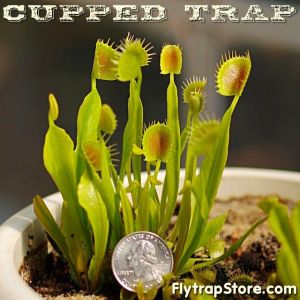
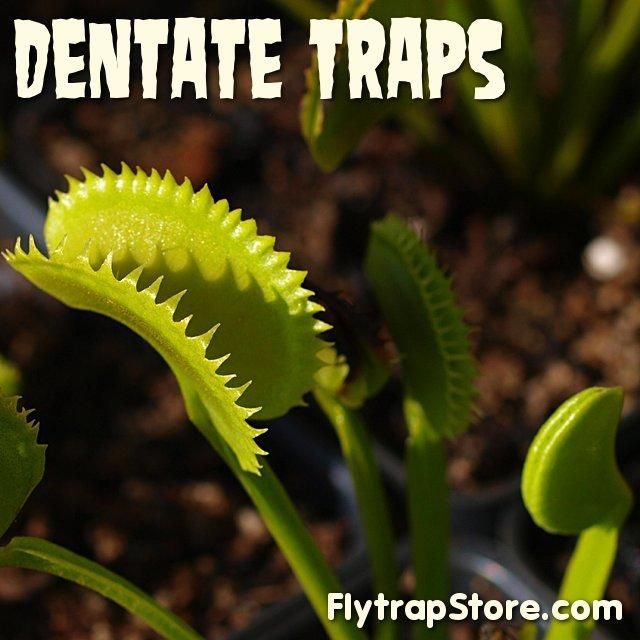
Quoted from the ICPS database: "A wild collected [Dionaea muscipula {Soland. ex Ellis}] plant was selected because its marginal spines were noticeably mutated. Instead of being long and filiform (as is usual), the spines of [Dionaea ' Dentate Traps ' {B.Meyers-Rice}] are short and triangular. This feature is not always apparent on small traps, or those produced early in the season, but the traps on mature plants in full growth are unmistakably dentate."
Propagation: Vegetative reproduction
Etymology: The marginal trap tentacles are small and fimbriately notched
Background: Dionaea muscipula 'Dentate Traps' was originally isolated in the mid-1970's from a group of wild collected plants by Leo Song Jr. of California State Fullerton and Bob Hanrahan. It was then propagated by seed and division. Interestingly, 'Denatate Traps' passes its unique characteristic of small marginal spines along to its sexually propagated offspring. It and all of the all red varieties are unique in this regard among the cultivated varieties of venus fly traps. It seems that 'Dentate Traps' and the all red varieties are the only cultivars that originated from naturally occurring populations. Since 1997, 'Dentate Traps' has been widely available because of propagation through tissue culture. 'Dentate Traps' venus fly traps have also been called "shark's tooth," "bear trap," "California dentate," "dentata," "dentate,"or "dente."
Photo Gallery: Dionaea 'Denatate Traps' Photo Gallery
 |
|
Last Updated ( Thursday, 08 May 2008 12:14 )
|