
Below you will find a list of all of the cultivated varieties of venus flytraps. This list includes some registrations that are preliminary. Any preliminary registrations will be noted with a red asterisk * and explanation.
This listing of Dionaea muscipula cultivars contains a photo (when available), the name of the cultivar, the name of the registrant, and a brief description of the cultivar. For more information including the publication that the cultivar was in, the breeder of the cultivar, the group of the cultivar and a more in depth description, visit the cultivar page for the plant you are interested in. If none exists, be patient. I hope to have them all up soon.
If a photo of any cultivar is missing and you would like to submit one, please email me at matt@flytrapcare.com. You will receive credit for any photos submitted.
| Photo | Cultivar Name | Description |
|---|---|---|
 | Dionaea ‘Akai Ryu’ Registered by: Ron Gagliardo | ‘Akai Ryu’, japanese for ‘Red Dragon’, is a beautiful red form of the Venus flytrap. It is highly distributed now and easily available to most growers. ‘Akai Ryu’ Venus flytraps have typical leaf and flower growth, but the leaf, petiole, and trap are dark maroon to burgundy in coloration. |
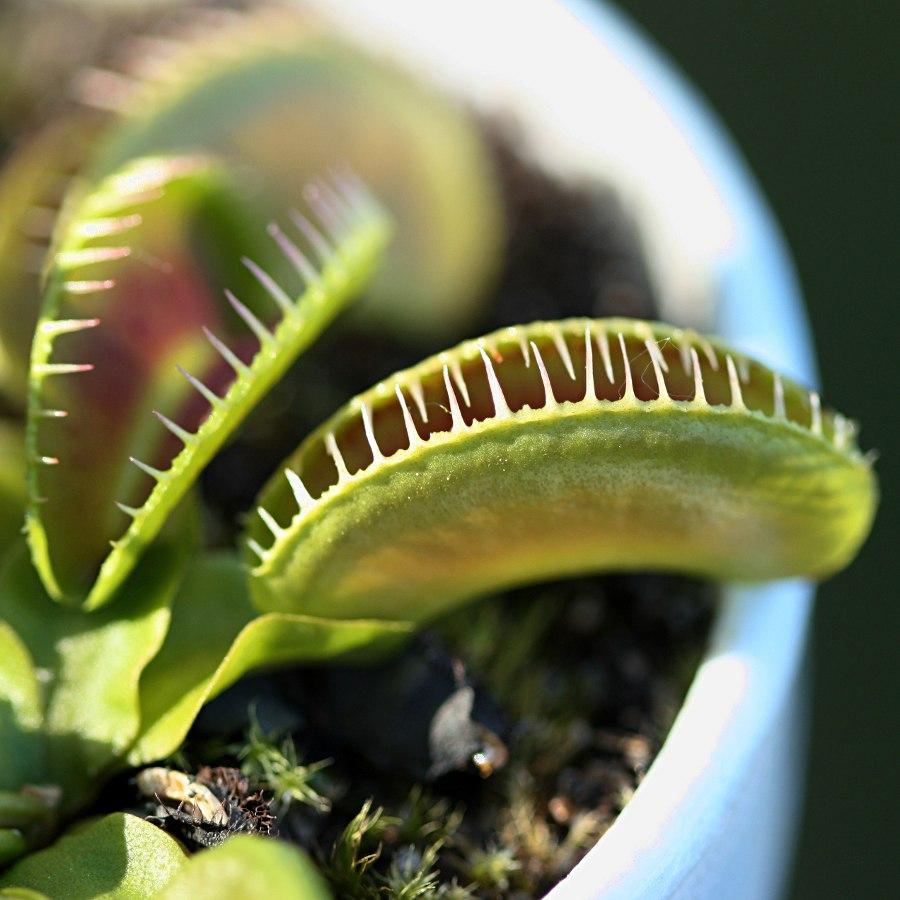 | Dionaea ‘Alien’ Registered by: Guillaume Bily | Discovered in the Netherlands during an open day of the carnivorous plant nursery Carniflora, Dionaea muscipula ‘Alien’ is a very interesting looking Venus flytrap with long, narrow traps, lots of tiny trigger hairs, vicious-looking teeth, and a highly arched trap. |
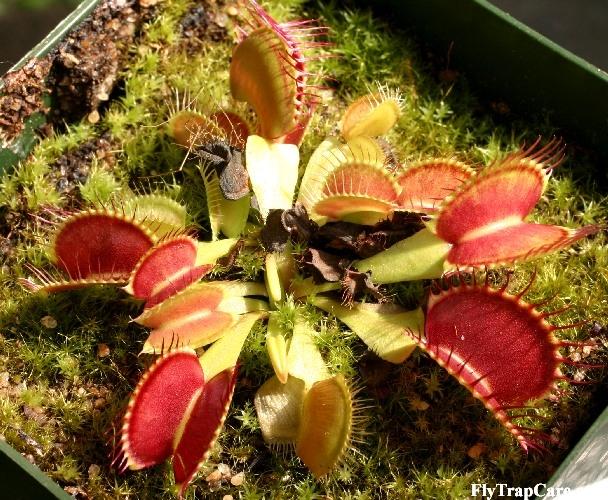 | Dionaea ‘B52’ Registered by: Barry Rice Photo by: Robert Ziemer | Develop by Henning von Schmeling, Dionaea ‘B52’ is considered the largest cultivated variety. It is known for its vigorous growth and extremely large traps which can reach over 2 inches when the plant is kept healthy. The traps also attain a deep coloration in bright light. |
 | Dionaea ‘Big Mouth’* Registered by: Tony Camilleri | Sometimes called ‘Red-Purple’, Dionaea ‘Big Mouth’ is characterized by very large traps on short leaves.*The name is not registered with IRA, due to an insufficient description.* |
 | Dionaea ‘Bohemian Garnet’ Registered by: Miroslav Srba Photo by: Robert Ziemer | Previously “Red Sawtooth”, Dionaea ‘Bohemian Garnet’ is an F2 cross between ‘Royal Red’ and a typically colored ‘Sawtooth’. Full-grown plants are half the size of a typical Venus flytrap. The plant’s coloration is similar to that of an ‘Akai Ryu’ but traps have a sawtooth look as opposed to the dentate look of the traps of the ‘Red Piranha’. |
 | Dionaea ‘Clayton’s Red Sunset’ Registered by: Colin Clayton | Dionaea ‘Clayton’s Red Sunset’ is another all red variety that differs from other red varieties in several ways. A few of these are: 1) It has long thin petioles. 2) It is totally red except for the teeth on new traps, which are yellow as compared to green on the ‘Akai Ryu’. 3) It is a deeper darker red than most other red cultivars. It becomes almost black in full sun. |
 | Dionaea ‘Clumping Cultivar’* Registered by: Peter D’Amato Photo by: Ryan Morse | A cultivar name that was established on page 66 of “The Savage Garden” by D’Amato. Dionaea ‘Clumping Cultivar’ produces “clumps of rosetted growing points, which result in a mound of densely packed leaves”.*Registration is preliminary because the standard is missing.* |
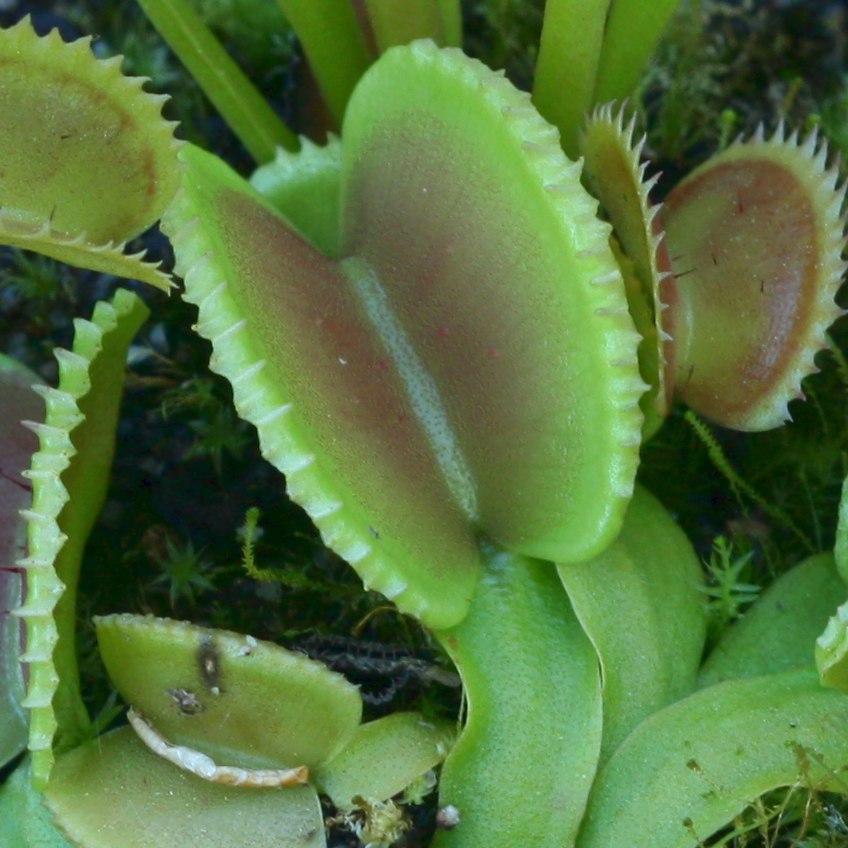 | Dionaea ‘Coquillage’ Registered by: Guillaume Bily | Discovered in the Netherlands during an open day of the carnivorous plant nursery Carniflora, Dionaea muscipula ‘Coquillage’ has short, widely spaced teeth on thick traps that resemble a shell, hence the name (coquillage means shell in French). |
 | Dionaea ‘Cupped Trap’ Registered by: Steven Stewart | Dionaea ‘Cupped Trap’ forms traps that are fused at the distal end, giving the traps a “cupped” appearance. Due to its tendency of the rhizome to divide frequently, a ‘Cupped Trap’ plant is challenging to grow to a large size. |
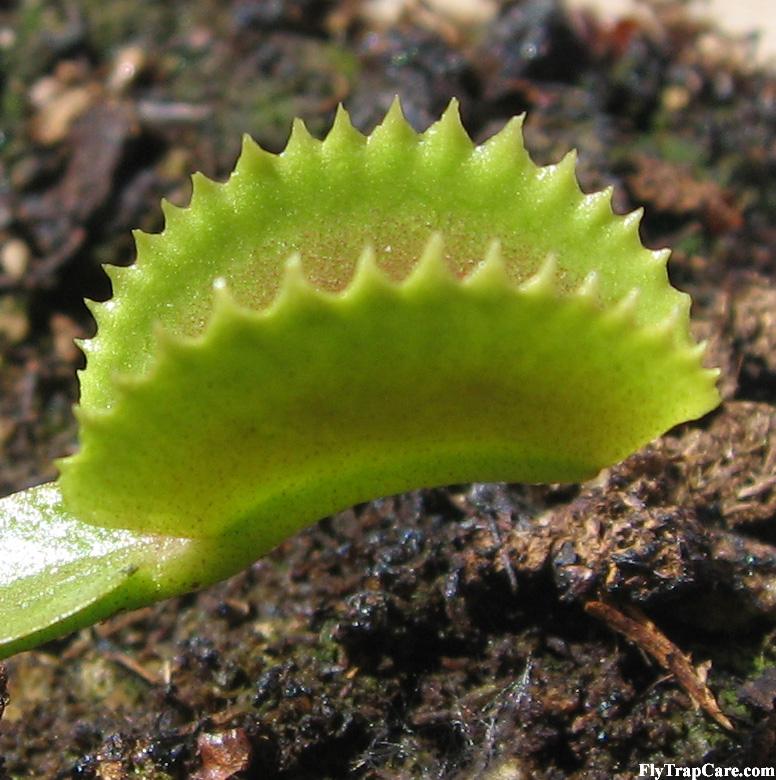 | Dionaea ‘Dentate Traps’ Registered by: Barry Meyers-Rice | Instead of being long and hair-like, the spines of the Dionaea ‘Dentate Traps’ are short and triangular, like sharp little teeth – hence Dentate. Included in this cultivar are the ‘Dentate’ and ‘Dente’ cultivars previously registered by D’Amato. |
 | Dionaea ‘Fused Tooth’ Registered by: Peter D’Amato | Appearing like a typical Venus flytrap in the spring, Dionaea ‘Fused Tooth’ displays middle and end season traps that have fewer spines and the spines are fused together by “webbing”. |
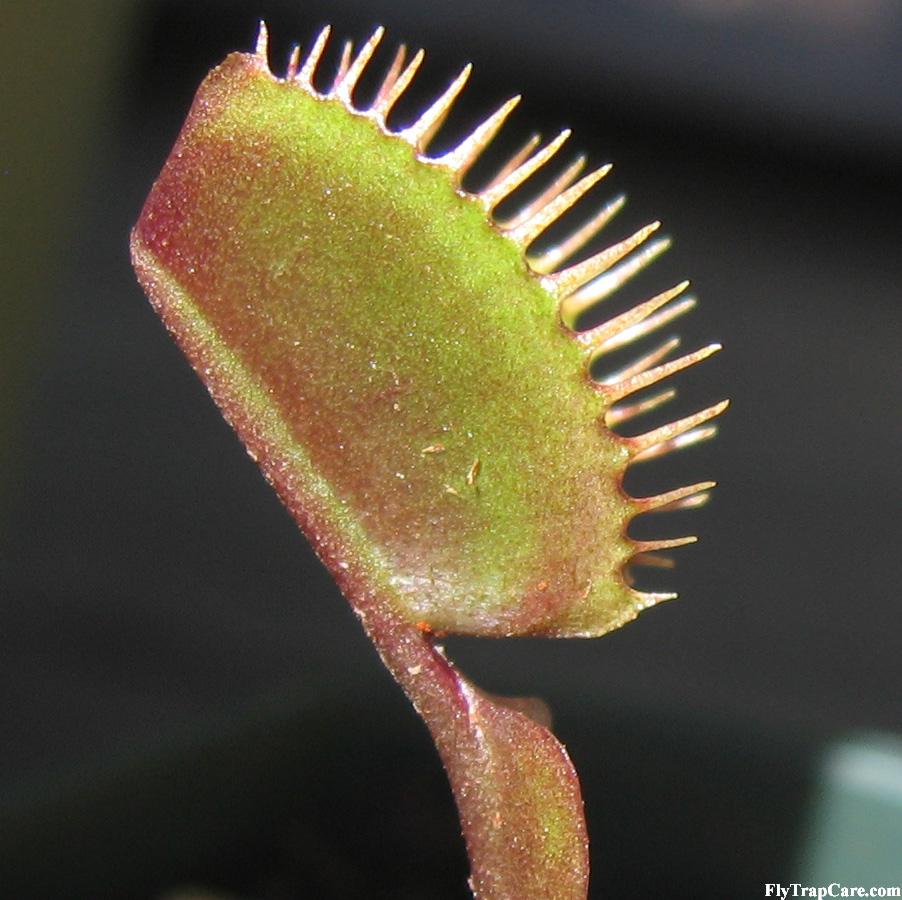 | Dionaea ‘Green Dragon’ Registered by: Marcus Erbacher & M. Stoeckl | Very similar in color and appearance to the ‘Akai Ryu’, Dionaea ‘Green Dragon’ exhibits traps whose margins remain green even when exposed to intense light. |
 | Dionaea ‘Holland Red’ Registered by: Marcus Erbacher & M. Stoeckl Photo by: Carnivorous Plants UK | Another red variety that is similar to the ‘Red Dragon’ and ‘Green Dragon’. My interpretation is that it will more easily revert to being greener without sufficient lighting than will other red varieties. |
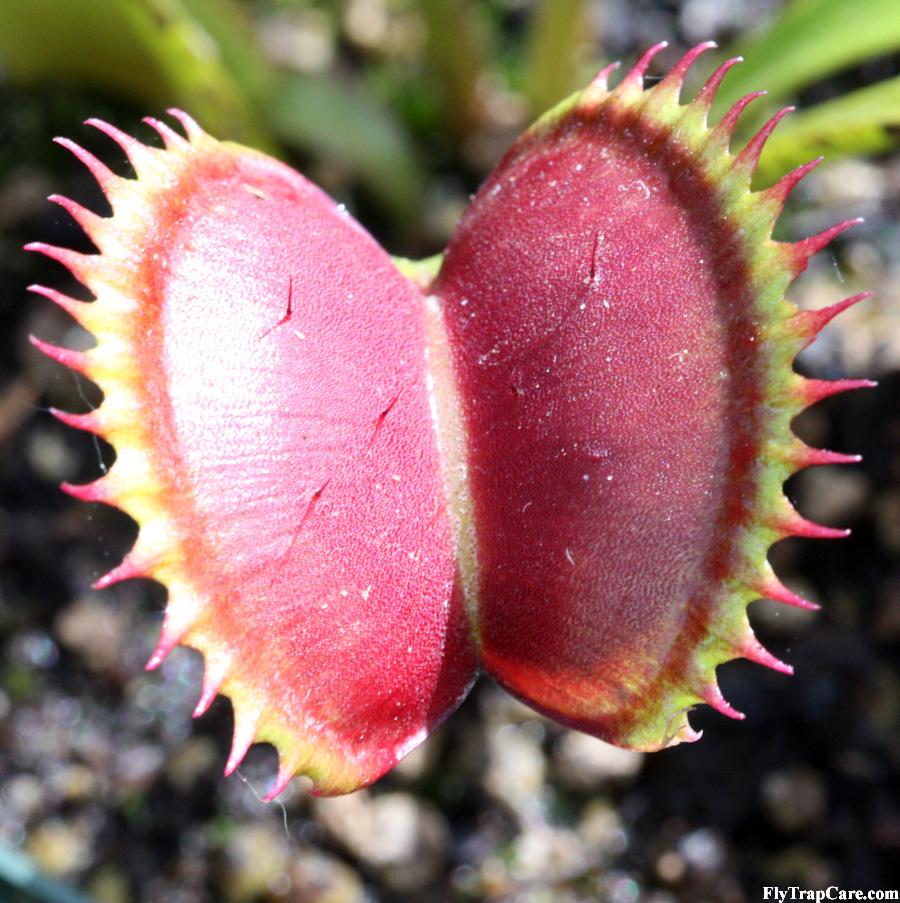 | Dionaea ‘Jaws’ Registered by: Leo Song Jr. | A vigorous variety with large, deep red colored traps, Dionaea ‘Jaws’ has short, pointy spines. The “teeth” look like shark teeth when the trap has just closed. |
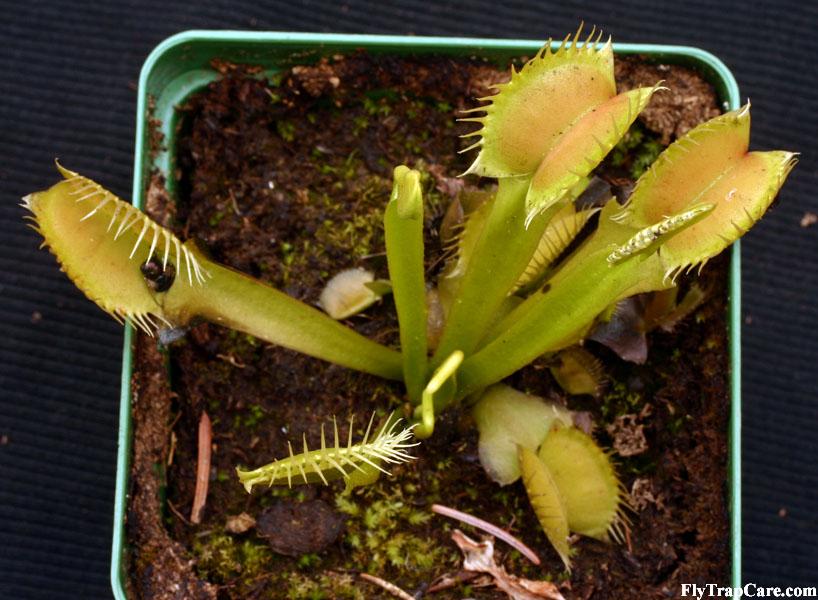 | Dionaea ‘Justina Davis’ Registered by: Barry Rice Photo by: Robert Ziemer | Dionaea ‘Justina Davis’ always has completely green traps even when exposed to the most intense light. |
 | Dionaea ‘Kinchyaku’* Registered by: Katsuhiko Kondo | Dionaea ‘Kinchyaku’, purse in English, is difficult to find much information on. Unable to find a good description and having never seen the plant first hand or even a photo, the best description I found is that ‘Kinchyaku’ plants have imperfect closure. I assume this is due to misshapen traps.*Name not registered with ICRA.* |
 | Dionaea ‘Korean Melody Shark’ Registered by: Dr. Gi-Won Jang | Dionaea ‘Korean Melody Shark’ is a very odd little flytrap. It has poorly formed traps that rest on the end of very long, thin, spaghetti-like petioles. It’s name is derived from the fact that it was initially grown in Korea (hence “Korean”), “Melody” because the trap blades look like musical notes, and “Shark” because both of its parents were a form of “Shark Tooth”. |
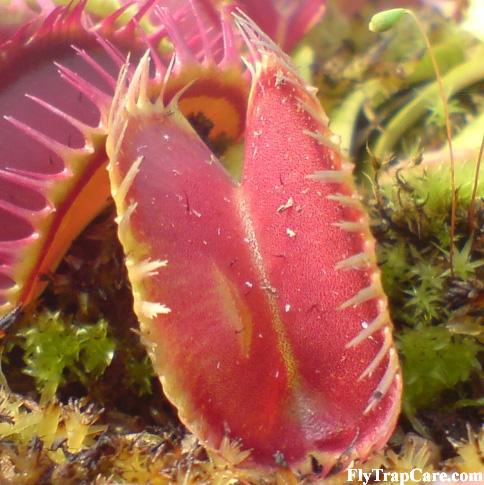 | Dionaea ‘Louchapates’ Registered by: Romuald Anfraix | Dionaea ‘Louchapates’ is yet another variety that is distinctive because of its spines. The teeth are flattened and wider than typical Dionaea plants due to the fact that each is formed by the fusion of three or four spines. The tips of the teeth are normally multiply divided, which reveals the fused nature of the teeth. Louchapates translates to ‘Noodle Ladle’ in English. |
 | Dionaea ‘Microdent’ Registered by: Gayl Quenon Photo by: Ryan Morse | As the name indicates, Dionaea ‘Microdent’ exhibits marginal teeth on its traps which are smaller than normal. In fact, ‘Microdent’ has the smallest teeth of any of the cultivars in the cultivar group ‘Dentate Traps’, which is so named because of its small teeth. Currently ‘Microdent’ and sometimes referred to as “microteeth” or “microdentata”, the name is to be corrected to ‘Microdent’. |
 | Dionaea ‘Mirror’ Registered by: Dieter Blancquaert | Dionaea ‘Mirror’ produces “flanges” or partial traps on the back and sides of the normal trap. The variability ranges from leaves with normal traps to leaves with double traps and everything in between (little “wings” or even “cups” on each side of the trap). Double traps are formed in the beginning and the end of a growing season. |
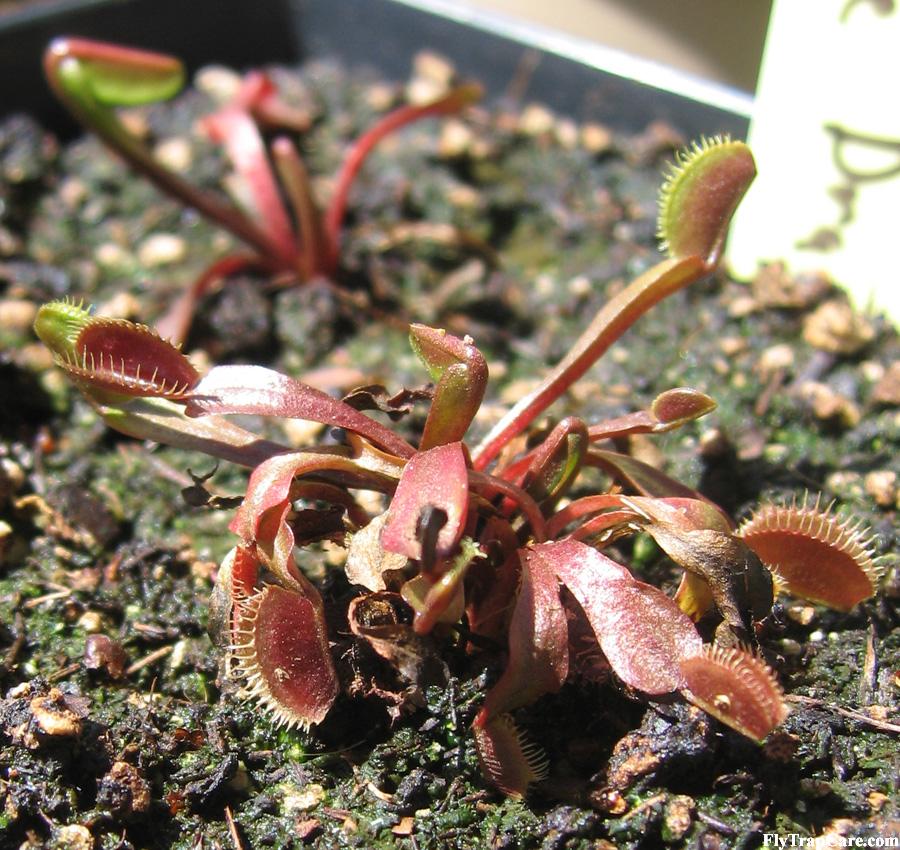 | Dionaea ‘Petite Dragon’ Registered by: Robert Ziemer | Similar in color and characteristics to the ‘Akai Ryu’ cultivar, but smaller. Also, the flower stalk normally bifurcates (splits into 2 stalks). |
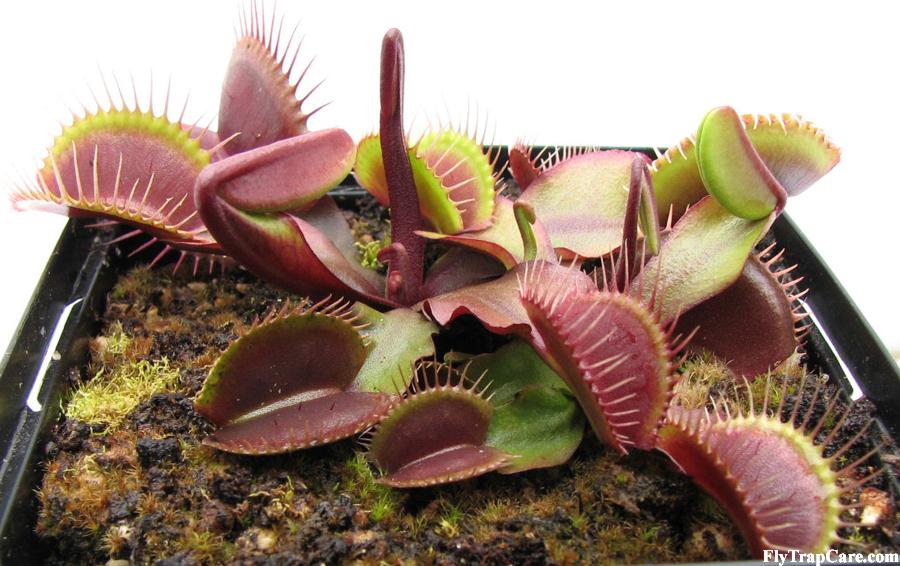 | Dionaea ‘Red Burgundy’ Registered by: Marcus Erbacher & M. Stoeckl Photo by: Carnivorous Plants UK | Intense dark red or burgundy in color, Dionaea ‘Red Burgundy’ is also noted to have more vigorous growth than other red varieties. |
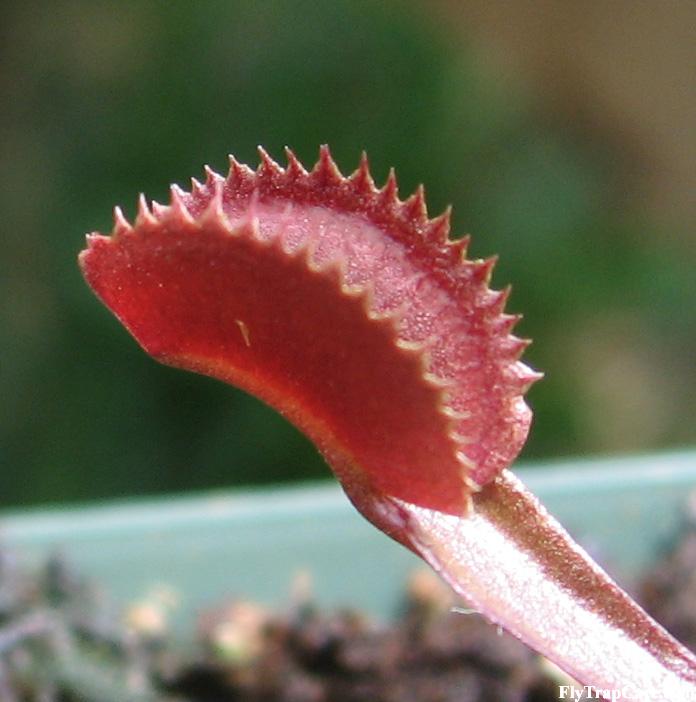 | Dionaea ‘Red Piranha’ Registered by: Ed Read | My personal favorite cultivar, the ‘Red Piranha’ has the coloration of an ‘Akai Ryu’ plant, but with triangular spines of the ‘Dentate Traps’ cultivar. Its traps look just like the mouth of a little red piranha. |
| Dionaea ‘Red Rosetted’* Registered by: Peter D’Amato | Another cultivar name that came into existence on page 66 of “The Savage Garden” by D’Amato, Peter writes “The leaves are rosetted all year, with deep red interior traps.”*Registration is preliminary because the standard is missing.* |
 | Dionaea ‘Royal Red’* Registered by: AUPBR 464 Photo by: Carnivorous Plants UK | Dionaea ‘Royal Red’ was isolated and patented by Exotica Plants of Australia. All parts of the plant are a deep red with the exception of the trap margin, which is green or golden. It has medium length petioles that are usually erect and narrow.*The cultivar name is not registered. The national registration authority refuses to provide data, January 1999 (JS).* |
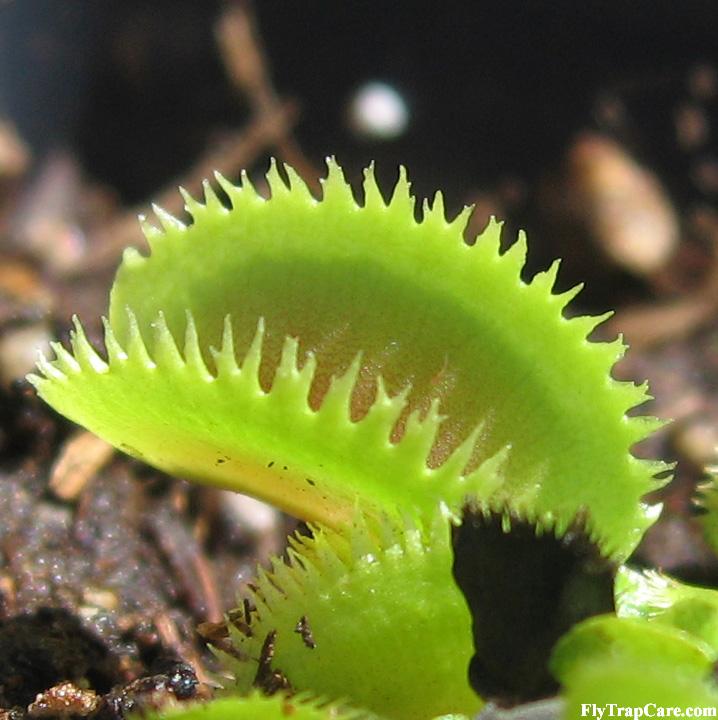 | Dionaea ‘Sawtooth’ Registered by: Barry Meyers-Rice | Also known as “Fine Tooth”, “Saw Tooth”, “Comb Tooth,” and “Dentata”, Dionaea ‘Sawtooth’, like other members of the ‘Dentate Traps’ group, has small triangular teeth. However, each of these small triangular teeth is further divided into two or three more “subteeth”. This results in the margin of the trap appearing frayed and soft. |
 | Dionaea ‘Scarlet Bristle’ Registered by: Rick Keehn | The Dionaea ‘Scarlet Bristle’ Venus flytraps has a nice red coloration that can become a deep burgundy in good lighting. Its coloration, coupled with its red coloration is the distinctive “bristly” marginal spines and trigger hairs, give it its name. |
 | Dionaea ‘Wacky Traps’ Registered by: Barry Rice | The traps and petioles of Dionaea ‘Wacky Traps’ are much thicker than typical Venus flytraps. Also, the traps are very slow to close, taking several minutes even with repeated teasing. Sometimes referred to as “Bart Simpson” because of the way it resembles Bart’s hair, ‘Wacky Traps’ is very slow-growing and has weird looking flowers. |
Cultivar Groups
A cultivar group is a collection of cultivars with common traits. Currently, as of May 2008, there is only one Dionaea muscipula cultivar group and that is the Dionaea Dentate Traps Group. This group contains all of the cultivars with marginal spines that are triangular or tooth-like.