
Grow Happy and Healthy Nepenthes
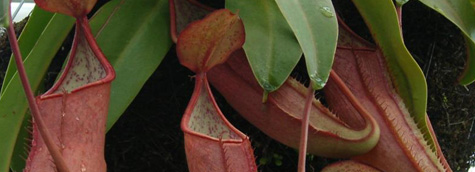
Unpacking and Planting your Nepenthes
When you first receive your Nepenthes, if they were shipped bare root, carefully unwrap any packing material and soak the whole plant (leaves, roots and all) in only pure distilled water, collected rain water or reverse osmosis water (don't use tap water! it can easily damage the sensitive roots of Nepenthes) for 15 minutes to half an hour. If you don't yet have some distilled, reverse osmosis or rain water, just leave the plant(s) in the bag in a place away from direct sunlight for a while until you are able to obtain pure water, but open the bag momentarily for a fresh air change before closing the bag again.
Planting media — Until you learn what alternative planting media will also work, plant them in a mixture of 50% pure long fibered sphagnum moss and 50% perlite. I prefer using the Chilean or New Zealand orchid moss because it's cleaner and will last longer, but you can purchase any kind of long fibered sphagnum and it will work. Warning: do not use Miracle-Gro brand products; they are "enriched" with plant food that may kill Nepenthes. If you're unable to find any suitable media for your plant locally, you can purchase Nepenthes planting soil from the store.
Planting container — Make sure that the container you plant your Nepenthes in drains well. A plastic pot with holes in the bottom works well. They do not like having their roots too wet and the should never be set in water. Nepenthes don't need much depth for their roots and will grow fine in 3.5 inch pots until they get too top heavy and outgrow the pot. Nepenthes do very well and look gorgeous in hanging baskets. Plant them so that the roots are buried into the planting medium while the green part of the leaves is above the surface.WaterUse only rainwater, distilled water or reverse osmosis water. Nepenthes require very pure water. Your tap water is likely to contain too much of dissolved solids—minerals and salts—that may kill a Nepenthes, possibly within weeks. Always keep your Nepenthes moist, but never soggy, and never dry. You should plan on watering just enough to keep the media moist, but never ever leave the plant standing in water.
Soil — Nepenthes must have a particular kind of soil that is poor in nutrients and slightly acidic. They will very likely die in "potting soil" or soil from your garden or yard. Their soil must be like the soil in their natural habitat: acidic and with almost no nutrients, moisture retentive but extremely well drained. Until you learn what various types of ingredients you can have in their soil (from research on the Internet or from books, for example), it is best to use pure long fibered shagnum moss (no other kind of "moss") mixed with a more or less equal amount of perlite.SunThe amount of sunlight a Nepenthes needs is hightly dependent on the species. Most Nepenthes do well in bright indirect light with a bit of direct sunlight. Most Nepenthes will also do very well under bright fluorescent lighting. If you are unsure about the lighting requirements of your particular Nepenthes, be sure to send an email to sales@flytrapcare.com or visit the FlytrapCare forum to ask.
Fertilizer — No! Never! Although experienced growers can occasionally fertilize Nepenthes lightly using special techniques such as foliar feeding or adding diluted fertilizer to their pitchers, Nepenthes will probably die when fertilized by beginner growers, for the same reason that they usually die from tap water: too many minerals and chemicals. These burn the plants' roots and kill them. Nepenthes get all the nutrition they need from the sun (through photosynthesis like any plant) and from the insects they catch. If you'd like, you can feed them captured flies or other insects (but not meat!).You're on your way!If you follow the above tips, you'll be well on your way to growing healthy and happy Nepenthes pitcher plants!